

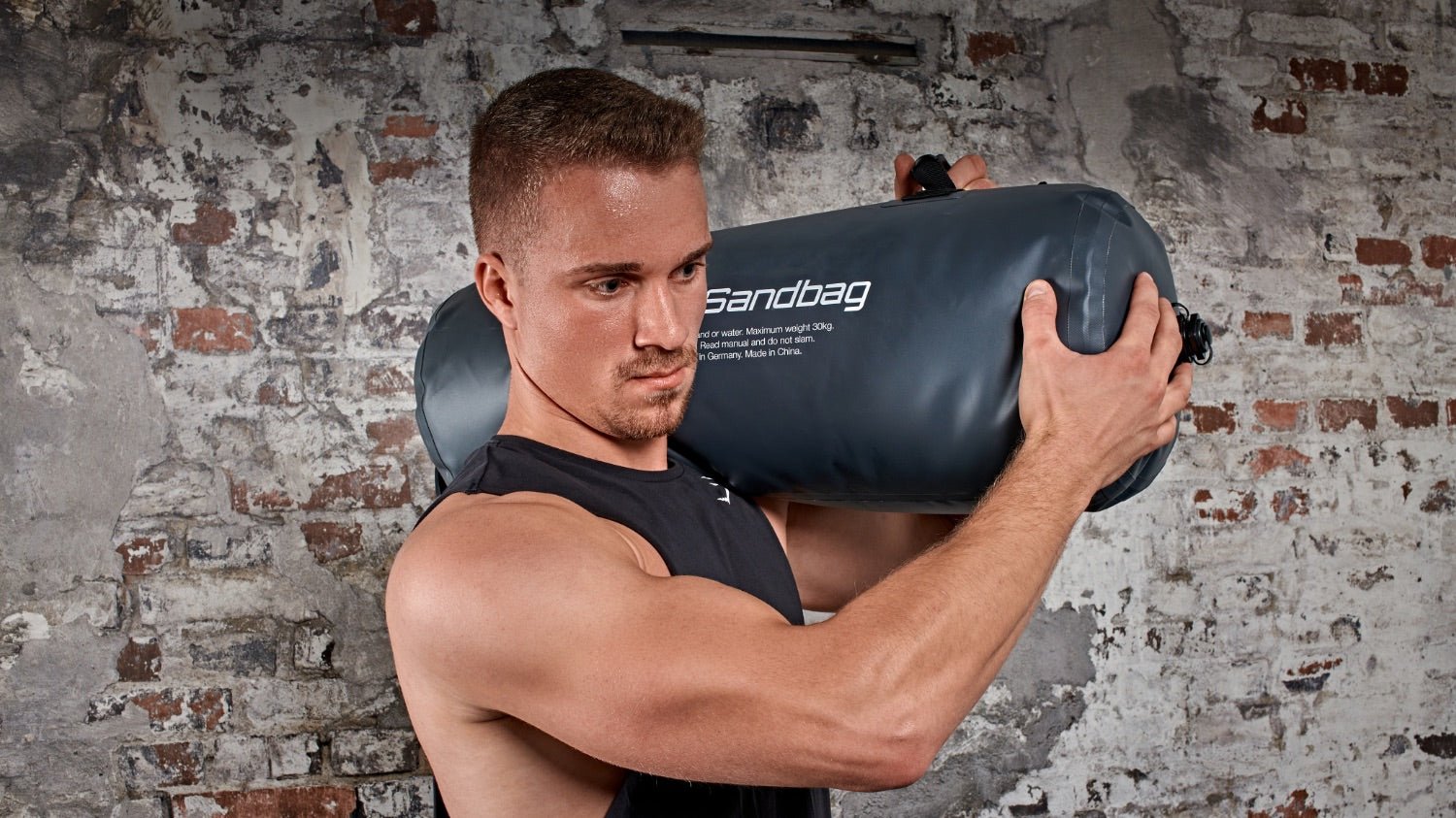
The sandbag is one of the most underrated tools in functional fitness. The load shifts, sloshes and fights back, so every rep trains your grip, core and stabilizers on top of the muscles you are actually targeting. This guide walks you through a complete sandbag workout: the key exercises, a simple full-body plan you can run at home, and how to load and progress without getting hurt.
Why the sandbag belongs in your training
Unlike a barbell or a fixed dumbbell, a sandbag has an unstable, shifting load. That instability forces your body to brace and control the weight through every phase of a lift, which builds the kind of real-world strength that carries over to lifting, carrying and sport. It is joint-friendly, easy to store and almost impossible to cheat with. If you want the full case for training with one, read why you should train with a sandbag.
Choosing your weight
Start lighter than you think. A shifting load is always harder than the same number on a barbell. As a rough guide, beginners do well with 10 kg to 15 kg, intermediate lifters with 15 kg to 25 kg, and stronger athletes with 25 kg to 30 kg. A single adjustable bag like the aerobis Sandbag fills from light all the way to 30 kg, so one bag covers your whole progression.
8 sandbag exercises for a full-body workout
These moves cover the fundamental patterns: squat, hinge, push, pull, carry and rotate. Put together, they make a complete full body sandbag workout that hits every major muscle group. New to loaded training? Start with the first four and add the rest as your technique improves.
1. Bear-hug squat
Hug the bag tight to your chest, elbows in, and squat down until your thighs are at least parallel. The front-loaded weight keeps you upright and hammers your quads and core. A great first move for beginners.

2. Sandbag deadlift
Grip the bag by the handles or the body, hinge at the hips with a flat back, and stand tall. This is your foundation for posterior-chain strength: glutes, hamstrings and lower back.

3. Sandbag clean
Explosively pull the bag from the floor to your chest in one motion, dropping under it as it rises. It trains full-body power and links your hinge to your press.

4. Push press
From the chest, dip slightly at the knees and drive the bag overhead. The leg drive lets you move more weight and builds strong, stable shoulders.

5. Bent-over row
Hinge forward, let the bag hang, and row it to your stomach. This balances all the pressing and builds a strong upper back.

6. Rotational lunge
Step back into a reverse lunge and rotate the bag across your front knee. It trains your legs and adds the anti-rotation core work that a sandbag does so well.

7. Shouldering
Lift the bag from the floor and clean it onto one shoulder, then lower and repeat on the other side. A brutal, athletic full-body move that mimics carrying awkward loads in real life.

8. Sandbag carry
Load the bag on your shoulder, in a bear hug or on your back and walk for distance or time. Carries build grip, core and mental toughness. For more on loaded carries, see our guide to the farmers carry.

A simple full-body sandbag workout plan
Here is a beginner-friendly circuit you can do at home in about 20 minutes. Run through the six moves back to back, then rest and repeat.
- Bear-hug squat: 40 s work, 20 s rest
- Sandbag deadlift: 40 s work, 20 s rest
- Push press: 40 s work, 20 s rest
- Bent-over row: 40 s work, 20 s rest
- Rotational lunge: 40 s work, 20 s rest
- Sandbag carry: 40 s work, 20 s rest
Complete 3 rounds with 90 s rest between rounds. Keep the weight moderate at first (around 10 kg to 15 kg) and focus on clean, controlled reps.
How to progress
Once the circuit feels manageable, you have several ways to make it harder without changing the exercises: add weight to the bag, add a fourth or fifth round, slow down the lowering phase of each rep, or shorten the rest. Progressing one variable at a time keeps your training measurable and sustainable.
Build your setup
A sandbag is one of the most cost-effective ways to build a home gym, and it pairs perfectly with the rest of your functional weights. Because it trains real, transferable strength, it is a cornerstone of any functional training setup. Want another simple, powerful way to train with load? Try rucking, walking with extra weight on your back.
Grab a bag, load it to your level, and put this sandbag workout to work. Your grip, core and everyday strength will thank you.


Leave a comment
All comments are moderated before being published.
This site is protected by hCaptcha and the hCaptcha Privacy Policy and Terms of Service apply.