

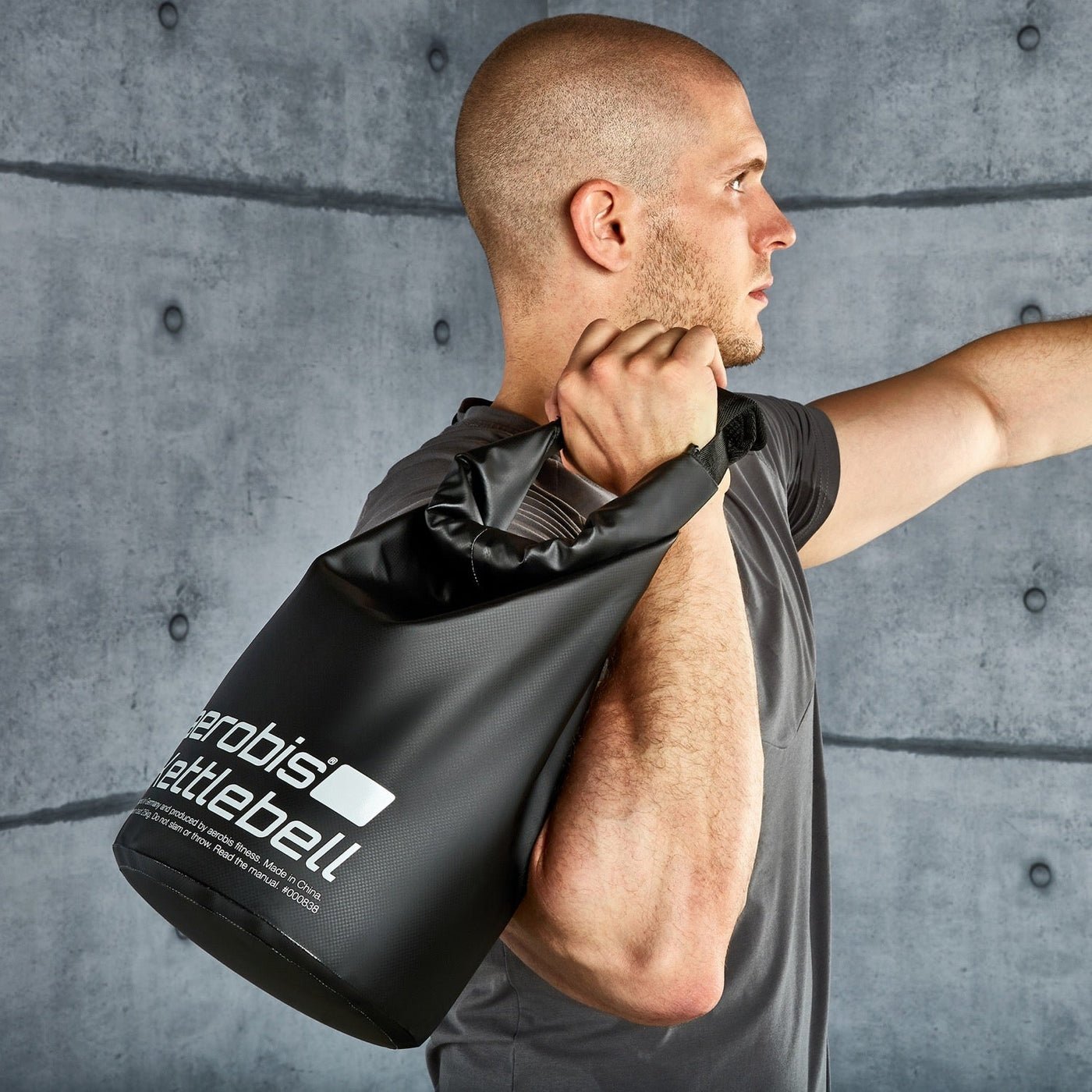
The kettlebell swing is the one exercise that turns a single piece of iron into a full-body power tool. In one smooth, hip-driven movement you train your glutes, hamstrings, back, core and grip, spike your heart rate, and build the kind of explosive strength that carries over to sprinting, jumping and lifting. It is simple to learn, brutally effective, and needs about a square metre of floor space. In this guide you will learn exactly what the kettlebell swing is, which muscles it works, how to nail the technique step by step, the mistakes to avoid, and three workouts you can start today.
What is a kettlebell swing and why it works
A kettlebell swing is a ballistic hip-hinge exercise. You hinge back at the hips, load your hamstrings and glutes like a spring, then snap your hips forward to launch the bell up to roughly chest height. The arms stay relaxed - they only guide the bell, they never lift it. All the power comes from your hips.
That hip snap is what makes the swing so valuable. It trains the posterior chain, the group of muscles running down the back of your body that most desk-bound athletes neglect. According to the Hospital for Special Surgery, a strong posterior chain improves posture, protects your lower back and drives almost every athletic movement. The swing hammers all of it in a single rep, and because it is a fast, cyclical movement it doubles as serious conditioning. In a classic American Council on Exercise study, kettlebell training burned around 20 calories per minute and pushed heart rates to roughly 93 % of maximum - numbers the lead researcher called "off the charts".
Muscles worked by the kettlebell swing
The swing is often sold as a "cardio" move, but it is a genuine strength builder. The prime movers are your glutes and hamstrings, which produce the explosive hip extension. Your erector spinae (lower back) work isometrically to keep your spine neutral, your lats control the bell on the way down, and your core braces hard against the momentum. Add in the forearms and grip that hold on to a moving load, and you have close to a full-body exercise in one lift.

Because the movement is powered by your hips rather than your shoulders, it also teaches you to generate force from your centre of mass - the same pattern you use to jump, sprint and change direction. That is why coaches treat the swing as a bridge between the gym and real athletic performance.
How to do a kettlebell swing with perfect form
Master the hip hinge before you add speed. Physiopedia describes the hip hinge as bending forward from the hips while the spine stays neutral - not rounding your back or squatting down. Get that pattern right and the swing takes care of itself. Here is the step-by-step:
- Set up. Stand with your feet a little wider than shoulder width, kettlebell about 30 cm in front of you on the floor.
- Hinge and hike. Push your hips back, grab the handle with both hands, tilt the bell slightly toward you, and "hike" it back between your legs like a football snap. Keep your back flat and your chest proud.
- Snap. Drive your hips forward explosively and squeeze your glutes hard. The momentum floats the bell up to chest height. Keep your arms loose.
- Stand tall. At the top, your body forms a straight line - glutes, quads and abs braced. Do not lean back or shrug.
- Absorb and repeat. Let the bell fall, hinge again to load the hamstrings, and let each rep flow into the next in a smooth rhythm.
Breathe out sharply as you snap your hips, in as the bell descends. The whole movement should feel like a jump you never leave the floor for.
Hardstyle vs. sport swing
You will see two main styles. The hardstyle swing, popularised by the tactical and strength community, stops the bell around chest height and emphasises a powerful, braced hip snap on every rep. It is the best choice for building strength, power and conditioning, and it is what most people should learn first. The overhead or sport swing carries the bell all the way above your head and is used in kettlebell sport for endurance events. For general fitness and posterior-chain power, stick with the chest-height hardstyle swing.
5 common kettlebell swing mistakes
Most swing problems come from squatting instead of hinging, or muscling the bell with the arms. Watch for these:
- Squatting the swing. If the bell dips toward your knees and your thighs do the work, you are squatting. Push your hips back instead, and keep the handle traveling high between your legs.
- Lifting with the arms. The bell should float, not be raised. If your shoulders burn before your glutes, relax your arms and drive harder with the hips.
- Rounding the back. A rounded spine under load is the fastest route to a sore back. Keep a flat back and a braced core throughout.
- Over-extending at the top. Leaning back to "finish" the rep stresses the lumbar spine. Stand tall and squeeze the glutes instead.
- Going too heavy too soon. Sloppy reps with a big bell build bad habits. Earn the weight with clean technique first.
What weight should you start with?
The swing rewards a heavier bell than beginners expect, because the hips are strong. As a rough starting point, many women begin around 8 kg to 12 kg and many men around 12 kg to 16 kg, then progress from there. The key is that the weight should be heavy enough to make you hinge and snap, but light enough to keep every rep crisp.

This is where an adjustable kettlebell earns its keep. Instead of buying a rack of fixed bells, you set the exact weight you need for the day - lighter for high-rep conditioning, heavier for low-rep power. The aerobis adjustable Kettlebell loads anywhere from 1 kg up to 25 kg with sand or steel shots, has a soft shell that will not scratch your floor, and folds down small enough to travel with. One bell replaces ten.
3 kettlebell swing workouts to try
Once your technique is solid, drop the swing into these formats. Rest as needed and stop a set before your form breaks down.
- The 10-minute EMOM. Every minute on the minute, perform 15 swings, then rest for the remainder of the minute. Repeat for 10 rounds. A brilliant conditioning finisher.
- The swing ladder. Do 10 swings, rest 30 s, then 15, rest, then 20, rest, then work back down. Great for building work capacity.
- Strength intervals. With a heavier bell, do 10 powerful swings, rest 60 s, and repeat for 8 to 10 sets. Prioritise a maximal hip snap on every rep.
Two or three swing sessions a week is plenty to see results. Research backs this up: a 2012 study in the Journal of Strength and Conditioning Research found that just six weeks of twice-weekly swing training improved both maximal and explosive strength, with gains comparable to jump-squat power training.
Build your swing with the right kettlebell
More exercises for a full Kettlebell Workout are in our overview of the best kettlebell exercises.
The kettlebell swing gives you strength, power and conditioning in one simple, joint-friendly movement - and it only gets better as you progress the load. If you are ready to start, an adjustable bell is the smartest first buy because it grows with you. Explore the full range in the aerobis Weights collection, pick your starting load, and put that hip snap to work. Your posterior chain will thank you.

Leave a comment
All comments are moderated before being published.
This site is protected by hCaptcha and the hCaptcha Privacy Policy and Terms of Service apply.