

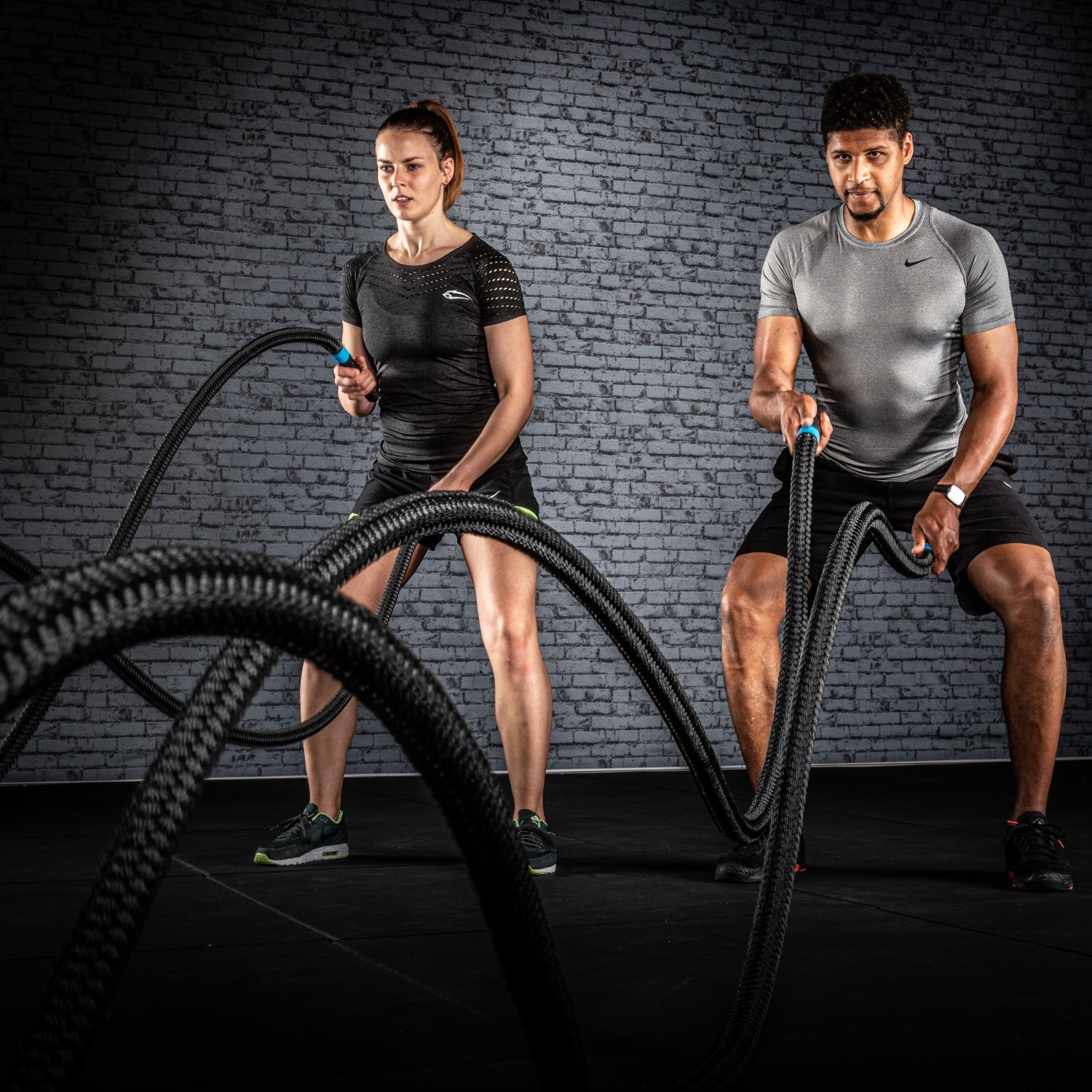
The difference between a workout that builds you up and one that wears you down often comes down to a single factor: correct execution. Good form protects your joints, keeps tension on the right muscles and is what actually makes an exercise effective. This guide walks through the core principles of correct exercise execution and shows how to apply them across the training tools we build at aerobis.
Why correct execution matters more than the exercise itself
Two people can do the same exercise and get completely different results. One trains the target muscles safely and progresses week after week. The other compensates with momentum, arches their back, or lets their joints absorb the load, and eventually gets stuck or injured. The exercise is never the problem. Execution is.

Five principles of correct form
- Neutral spine: Keep your back in its natural position, avoid rounding or over-arching, especially under load.
- Controlled tempo: Lower slowly, lift with intent. Momentum takes tension off the working muscle and puts it on your joints instead.
- Full range of motion: Half reps build half the strength. Move through the whole range your mobility allows.
- Braced core: A tight midsection stabilises your spine and transfers force efficiently between your upper and lower body.
- Steady breathing: Exhale on the effort, inhale on the release. Holding your breath spikes blood pressure and breaks your rhythm.
Common mistakes to avoid
- Chasing more reps or more weight before the movement itself is clean.
- Letting the lower back round during hinges, rows or presses.
- Using momentum instead of muscle to move the weight.
- Rushing the eccentric (lowering) part of a rep, which is where most of the muscle-building work happens.
- Skipping a warm-up set to feel out the movement pattern.
Applying good form to your training tools
Sling training
Your body angle determines the load, so set it before you start and keep your core braced throughout. Keep tension on the rope for the entire rep. Letting it go slack and then re-tightening puts a sudden jolt on your shoulders instead of a smooth, controlled load.
Rope training
Power comes from your hips and legs, not just your arms. Keep a slight bend in your knees, brace your core and let the wave travel down your arms rather than muscling it with your shoulders alone.
Resistance bands
Control the band on the way back, not just on the way out. The return phase is where bands challenge your muscles the most, so resist the pull instead of letting it snap back.
Flywheel and sled training
With flywheel training, the eccentric phase is the whole point: decelerate the cord smoothly instead of yanking it to a stop. With sled work, keep a consistent, driving stride rather than short, choppy steps.

How to check your own form
- Film yourself from the side. Video reveals what a mirror cannot, especially for hinges and presses.
- Start light. Learn the pattern first, then add load or resistance.
- Slow down. If you cannot control a rep at half speed, it is too heavy or too fast.
- Ask for feedback. A training partner or coach will spot compensations you cannot feel yourself.
Want to put this into practice? Explore our sling trainers, rope trainers and resistance bands, all designed in Germany to support clean, controlled training at any level.
Frequently asked questions
What is the most important part of correct exercise execution?
Control. If you can control the full range of motion at a steady tempo, most other elements of good form fall into place.
Should I lower the weight to fix my form?
Yes. There is no benefit to lifting more weight with worse technique. Reducing the load until your form is clean will build more usable strength over time.
How do I know if my form is correct?
Film yourself, compare it to a trusted demonstration, and check whether you can perform the movement slowly and under control. If you cannot, the weight or speed is the problem, not you.
Can bad form cause injury even with light weight?
Yes. Repeated poor movement patterns add up over time, even without heavy load. Building good habits early protects you as you progress to heavier training.



Leave a comment
All comments are moderated before being published.
This site is protected by hCaptcha and the hCaptcha Privacy Policy and Terms of Service apply.