

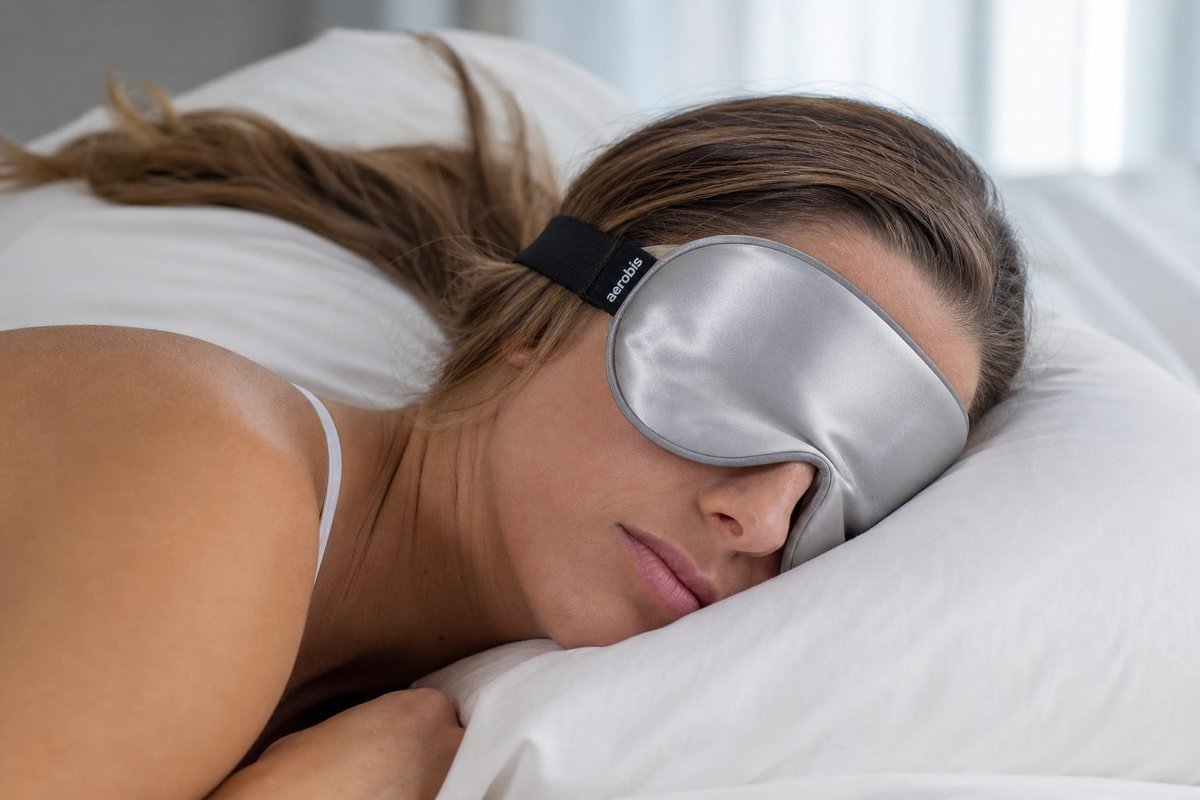
Most sleep masks fail athletes for a simple reason: they are flat. Foam sits on your lids. Light sneaks in at the nose. When you roll onto your side, the whole thing shifts and the blackout is gone. A 3D contour sleep mask is built for that problem. Sculpted eye cups keep the foam off your eyes. A shaped nose bridge seals the gap that flat masks leave open. That is blackout fit you can keep through a restless night after a late session.
What 3D contour actually means
Contour is not a marketing word for thicker foam. It means the mask is shaped like a face, not like a strip of cloth.
- Eye cavities: the foam lifts away from your lids and lashes. You can blink. REM stays less disturbed. Side sleep does not mash the eyeball into the pillow.
- Nose seal: a contoured baffle closes twice around the bridge. That is where flat masks leak streetlight, hotel LEDs and early sunrise.
- Memory foam mold: slow-rebound foam settles to your cheekbones and brow. Soft pressure around the rim. Zero pressure on the eyes.
If a mask leaves a bright crescent at the nose or digs into your temples after 20 min, it is not a contour fit. It is a flat pad with a strap.
Why athletes feel the difference
After intervals or heavy lifting you fall asleep warmer, with a higher resting heart rate and a brain that is still online. You need darkness you do not have to defend. Thin curtains, a partner reading, a 04:30 summer dawn or a hotel hallway light will all find the nose gap of a flat mask.
Side sleepers notice first. A flat panel presses the lid. A 3D cup leaves space. Travel days stack the problem: flight nap, bright cabin, then a room with no blackout curtains. Contour fit is what keeps the mask useful when the room will not cooperate.
Quick fit check before you trust it overnight
- Put the mask on in normal room light. Close your eyes. Can you still see a bright edge at the nose? If yes, the seal is wrong.
- Blink a few times. If the foam touches your lashes, the cups are too shallow.
- Roll onto each side for 30 seconds. The strap should stay put and the cups should not collapse onto the eyes.
- Wear it for a short nap first. Temple dig or hot spots mean the strap is too tight or the rim is wrong for your face.
True blackout around the nose. No pressure on the eyes. A strap that survives a roll. That is the short list.
How long should you sleep after a hard day?
Most trained adults do better in a 7.5 to 9 h in-bed window after heavy lifting, intervals or two sessions. Easier days can sit closer to 7 to 8 h. Pick a wake time, then protect the bedtime that matches yesterday's load.
Using a 3D sleep mask without turning it into clutter
- Mask on at lights out. Do not scroll under it.
- On travel days, use it for the flight and the hotel night. That is when flat masks fail.
- Side sleepers: keep the cups deep enough that the pillow never pushes foam onto the lid.
- Hand wash in cold or lukewarm water up to 30 °C. No machine, no tumble dryer, no iron. Reshape and air dry away from heaters.
If you want one built for contour blackout, the Sleep Mask - 100 % blackout with 3D memory foam uses 3D memory foam, a dual nose seal and a cool-touch shell. This article is about the fit. The product page has the full specs.
FAQ
Is a 3D contour sleep mask better than a flat one?
For side sleep, travel and any room that is not pitch dark, yes. Flat masks are cheaper and often leak at the nose or press the eyes. Contour cups and a nose seal fix both.
Can I wear a contour mask every night?
Yes, if it sits off the eyes and you keep it clean. If you wake with marks or dry eyes, loosen the strap or check that the cups still clear the lids.
Does contour fit replace blackout curtains?
No. Curtains help the whole room. A 3D sleep mask helps when curtains are thin, when you travel, or when you share a room. Use both when you can.

Leave a comment
All comments are moderated before being published.
This site is protected by hCaptcha and the hCaptcha Privacy Policy and Terms of Service apply.