

Everything that makes you fast, strong and injury-resistant sits on the back of your body: your glutes, your hamstrings, your calves, your spinal erectors and your lats. Together they form the posterior chain - and most training plans barely touch it. Posterior chain exercises fix that. They build the muscles you cannot see in the mirror, the ones that extend your hips, drive every sprint and jump, and keep your lower back healthy while you sit at a desk all week. This guide shows you what the posterior chain actually is, why training it pays off, the nine best exercises, and how to put them into a workout that takes 20 minutes.
What is the posterior chain?
The posterior chain is the group of muscles running down the back of your body, working together as one connected system rather than as isolated parts. The main players are:
- Gluteus maximus, medius and minimus: your primary hip extensors and the strongest muscle group you own.
- Hamstrings: extend the hip and flex the knee, and take the brunt of the load when you sprint.
- Erector spinae: the long muscles either side of your spine that keep your torso upright under load.
- Latissimus dorsi and mid-back: the upper end of the chain, connecting your arms to your hips.
- Calves: the final link that transfers force into the ground.
The key word is chain. When you pick a heavy bag off the floor, force travels from your feet through your calves, hamstrings, glutes and back into your hands. Train those links in isolation and you get a weak transfer. Train them together and you get usable strength.
Why posterior chain exercises matter more than mirror muscles
Modern life is brutally anterior-dominant. You sit, your hip flexors shorten, your glutes switch off, and your quads end up doing work they were never designed to do alone. The research on the alternative is compelling:
- Athletic power. An eight-week study on posterior chain and core training found significant improvements in vertical jump height, jump power and the hamstring-to-quadriceps strength ratio (Journal of Sports Medicine and Physical Fitness). Your hips are your engine, and hip extension is what launches you.
- A back that holds up. A systematic review and meta-analysis comparing posterior chain resistance training with general exercise and walking programmes concluded that 12 to 16 weeks of training the thoracic, lumbar and hip extensors produced the largest gains in pain, disability and muscle strength for people with chronic low back pain (systematic review, Healthcare).
- Fewer hamstring tears. Eccentric hamstring work is one of the most studied injury-prevention tools in sport. An umbrella review of the Nordic hamstring exercise found consistent increases in eccentric hamstring strength and reductions in hamstring injury rates across athletic populations (umbrella review, Sports Medicine - Open).
- Glutes that actually grow. A 2023 trial comparing hip thrust and back squat training over nine weeks found both built gluteal muscle and both transferred to a stronger deadlift, so a strong backside comes from loaded hip extension, not from a big gym setup (Journal of Sports Science and Medicine).
The 9 best posterior chain exercises
You can do all of these at home. A flexible weight, a band and a solid anchor cover the whole chain. Move slowly, own the position, and add load only once the pattern is clean.
1. Romanian deadlift (the hip hinge you build everything on)
Hold a weight in front of your thighs, soft knees, chest proud. Push your hips straight back until you feel a deep stretch in your hamstrings, then drive them forward and squeeze your glutes hard at the top. Your spine never rounds and your shins stay nearly vertical. This is the single most valuable posterior chain exercise there is: master it and the other eight get easier.
2. Good morning
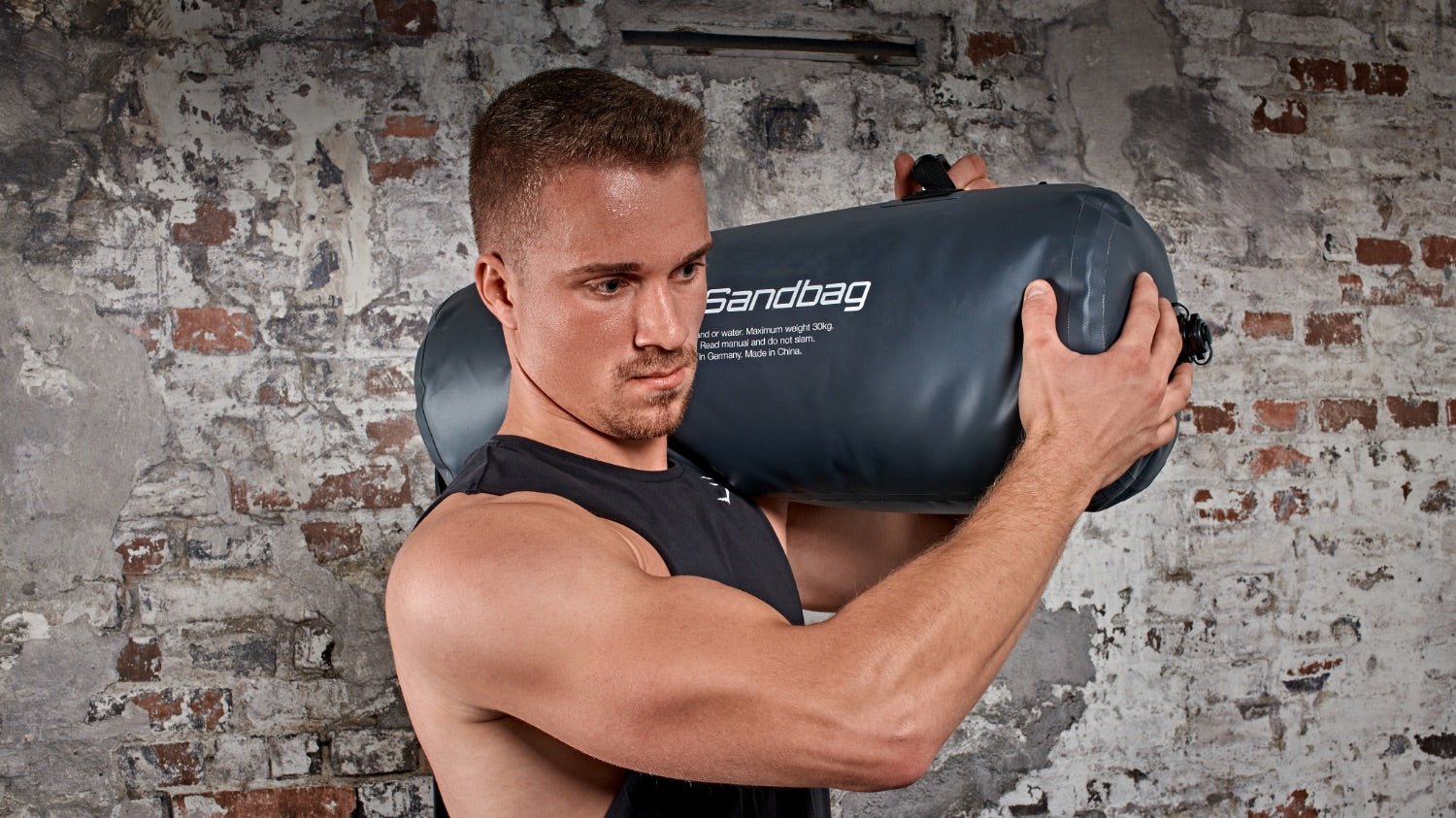
Stand on a Premium Powerband with both feet and lay the top of the loop across your upper back, on the traps and never on your neck. Or hold a Sandbag across your upper back. Soften your knees, brace and push your hips back until your torso is close to parallel with the floor. Stop earlier if your lower back starts to round. Then drive your hips forward and stand tall with your glutes tight, without leaning back. The long lever makes even a light load feel heavy fast, which is exactly why it works your hamstrings and spinal erectors so hard.
Cues: hips go back first, knees stay soft, spine stays long. Lower for two to three seconds, exhale as you stand. Start with a Light or Medium band, or 5 kg to 10 kg in the Sandbag, for 3 sets of 8 to 12 reps. Move up only when every rep stays clean.
3. Hip thrust
Upper back on a bench or box, weight across your hips, feet flat. Drive through your heels until your hips are fully extended and your body forms a straight line from knee to shoulder. Pause for a full second at the top. This is the most direct loaded hip extension you can do, and the research above shows it builds glutes just as well as squatting.
4. Single-leg glute bridge
Same idea, half the base. Lie on your back, one foot planted, the other leg extended, and push your hips up with one leg only. Your hips will want to drop and rotate - do not let them. It exposes side-to-side imbalances that a two-legged bridge hides completely.

5. Swings
The hinge, but explosive. Hike the weight back between your legs, then snap your hips forward so the load floats up on momentum, not on arm strength. Swings teach your glutes to fire fast, which is what sprinting and jumping actually demand. Keep the load light enough that your back never rounds - 8 kg to 16 kg is plenty for most people.
6. Nordic hamstring curl
Kneel with your ankles anchored, keep your body in a straight line from knee to head, and lower yourself forward as slowly as you possibly can. Catch yourself with your hands, push back up and repeat. It is the exercise behind that injury-prevention research, and even 3 sets of 3 slow reps a week produce a strong effect. Expect to be sore.
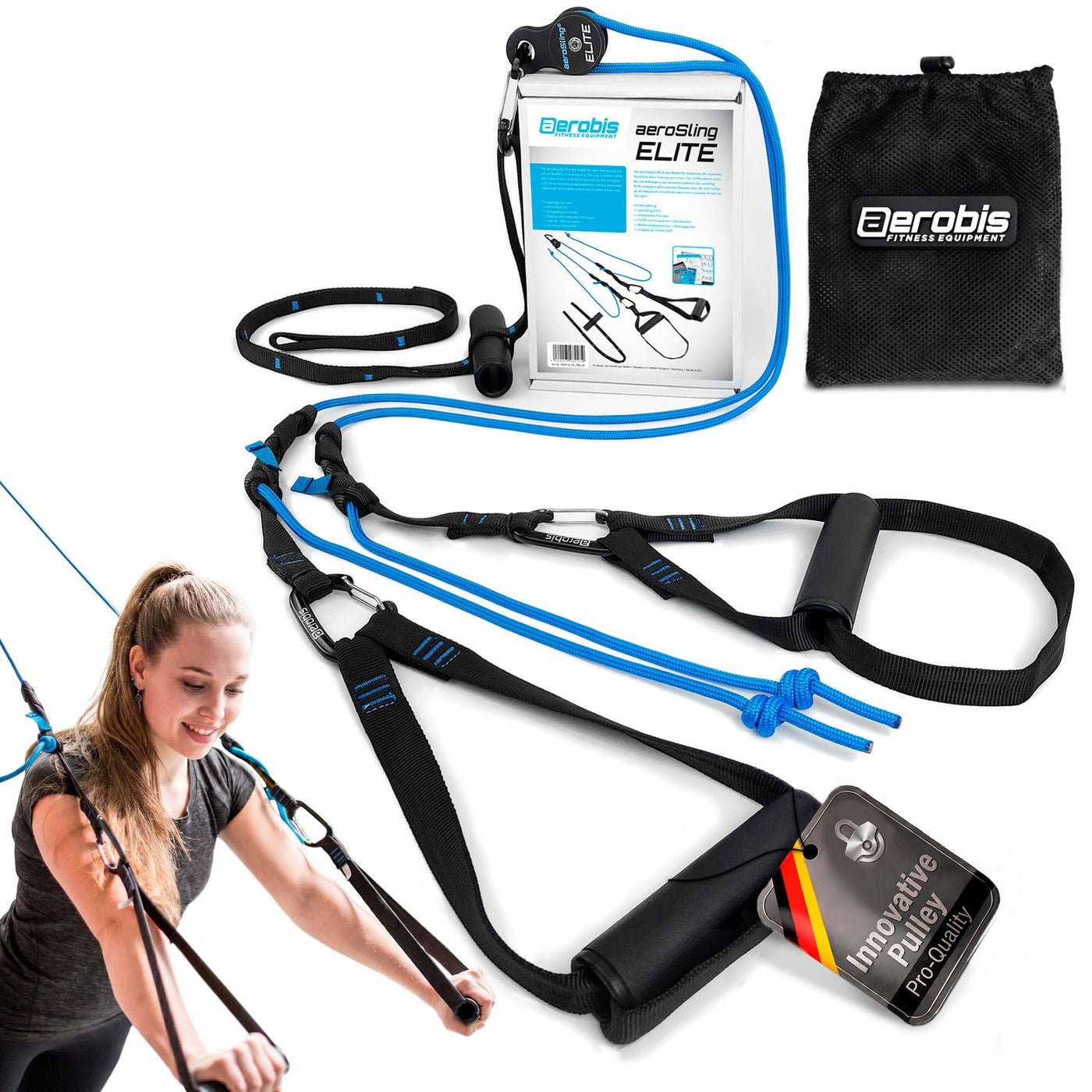
7. Sling trainer leg curl
Lie on your back with your heels in the foot loops of a sling trainer, lift your hips, then pull your heels toward your glutes and press them back out under control. It hits the hamstrings at the knee joint rather than the hip, which is the half of their job that hinges alone miss.
8. Banded pull-through
Anchor a band low behind you, straddle it, hold it between your legs and hinge. Then stand tall and squeeze your glutes against the band's pull. Because the resistance is horizontal, the tension peaks exactly where your glutes are strongest - at full hip extension. It is the perfect way to feel the hinge if you struggle to "find" your glutes.
9. Bent-over row
The posterior chain does not stop at your lower back. Hinge forward to roughly 45 degrees, hold that position, and row the load to your ribcage. Your lats, rhomboids and rear delts do the pulling while your hamstrings and erectors work isometrically to hold the hinge. Two exercises for the price of one.

A 20-minute posterior chain workout
Run through this circuit 3 times with 60 to 90 seconds of rest between rounds. Twice a week is enough to feel a difference within a month.
- Romanian deadlift - 10 reps, slow on the way down
- Hip thrust - 12 reps with a 1-second pause at the top
- Swings - 15 explosive reps
- Banded pull-through - 15 reps
- Bent-over row - 12 reps
- Nordic hamstring curl - 3 reps, as slow as you can control
Warm up first with 2 minutes of glute bridges and bodyweight hinges. If you only have 10 minutes, keep the Romanian deadlift, the swings and the Nordic curl - that trio alone covers slow strength, explosive power and eccentric protection.
The gear that makes it work
Posterior chain exercises reward load that you can adjust quickly and grip in different ways. Three tools cover almost everything:
- Sandbag: one bag, 1 kg to 30 kg, six handles. Load it with sand, steel shots or water, and it becomes your Romanian deadlift bar, your good-morning yoke, your hip-thrust weight and your carry object. The shifting fill also forces your stabilisers to work overtime.
- Kettlebell: adjustable from 1 kg to 25 kg with a soft, padded shell. Perfect for swings, single-leg deadlifts and goblet-style hinges without a rack full of cast iron.
- Premium Powerbands: latex-free silicone bands that stretch up to 300 %. Ideal for pull-throughs, banded hip thrusts and glute activation before you load up. Each band is 100 cm long, and you fine-tune the resistance simply by changing your distance from the anchor.
Browse the full Weights collection for adjustable loads, or the Powerbands collection if you want a setup that fits in a backpack. Want to add the eccentric side of the equation? A flywheel trainer lets you overload the lowering phase of hip hinges and leg curls, which is where most posterior chain adaptation happens.
Common mistakes to avoid
- Squatting your hinges. If your knees travel forward and your torso stays upright, you turned a hamstring exercise into a quad exercise. Push your hips back, not down.
- Chasing load too early. A rounded back under a heavy bag is how people hurt themselves. Own the pattern at 10 kg before you go looking for 30 kg.
- Skipping the eccentric. Lowering slowly is not wasted time. It is where roughly the biggest share of the strength and injury-prevention benefit comes from.
- Training only the hips. Your hamstrings cross two joints. If every exercise you do is a hinge, you are only training half of what they do. Add a leg curl.
- Never going explosive. Slow strength and fast power are different qualities. Swings, cleans and jumps teach your glutes to fire when it counts.
The bottom line
Your backside is not a vanity project. It is the engine that drives every stride, every jump and every heavy thing you pick up, and it is the best insurance policy your lower back and hamstrings will ever have. Two sessions a week, a handful of well-executed posterior chain exercises, and a load you can adjust in seconds - that is the whole formula. Start with the hinge and build from there.

Leave a comment
All comments are moderated before being published.
This site is protected by hCaptcha and the hCaptcha Privacy Policy and Terms of Service apply.